How a single agent's subtle, hard-to-detect misbehavior (micro) propagates to mission failure (macro) β and how resilient a learned swarm is to it.
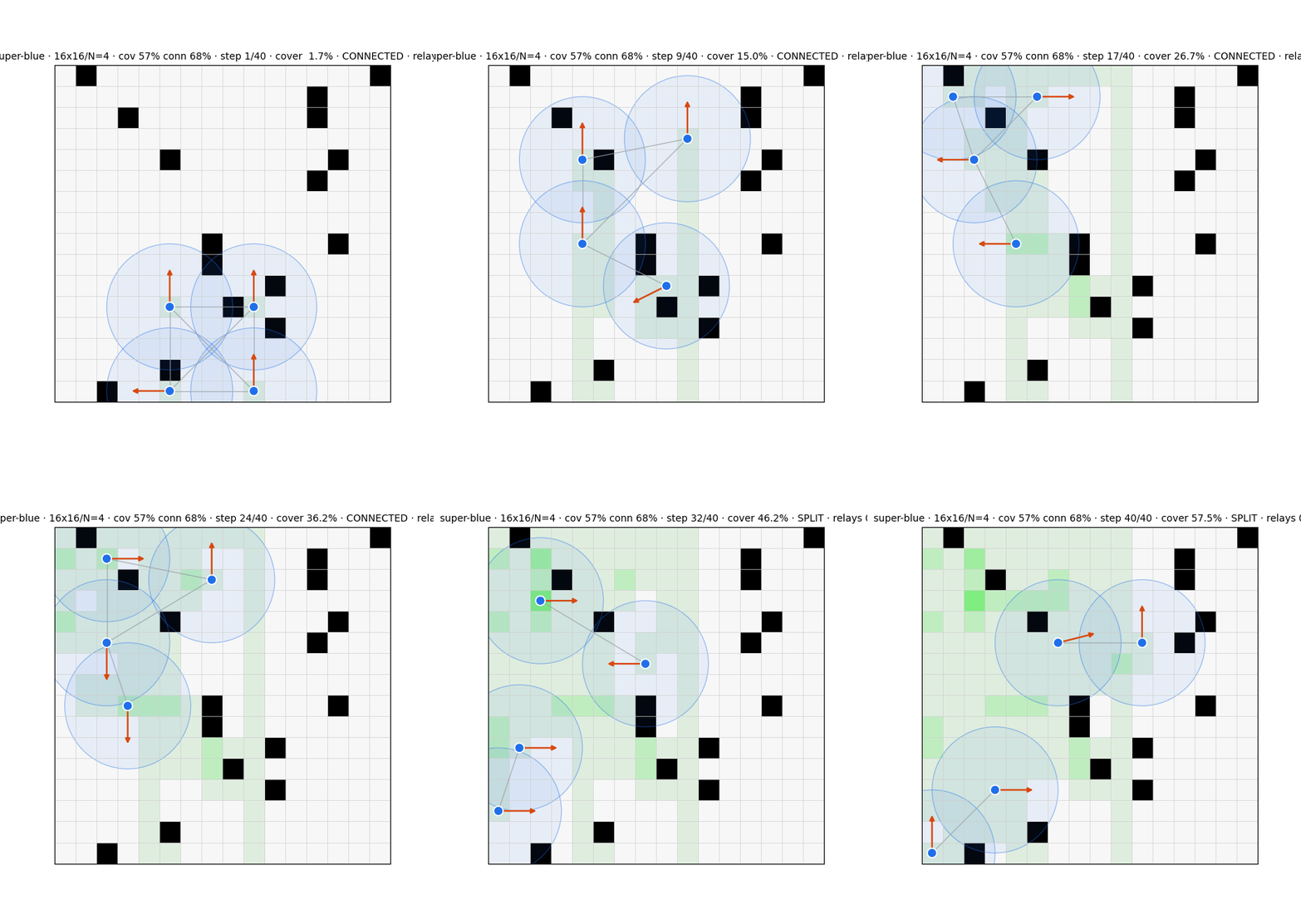
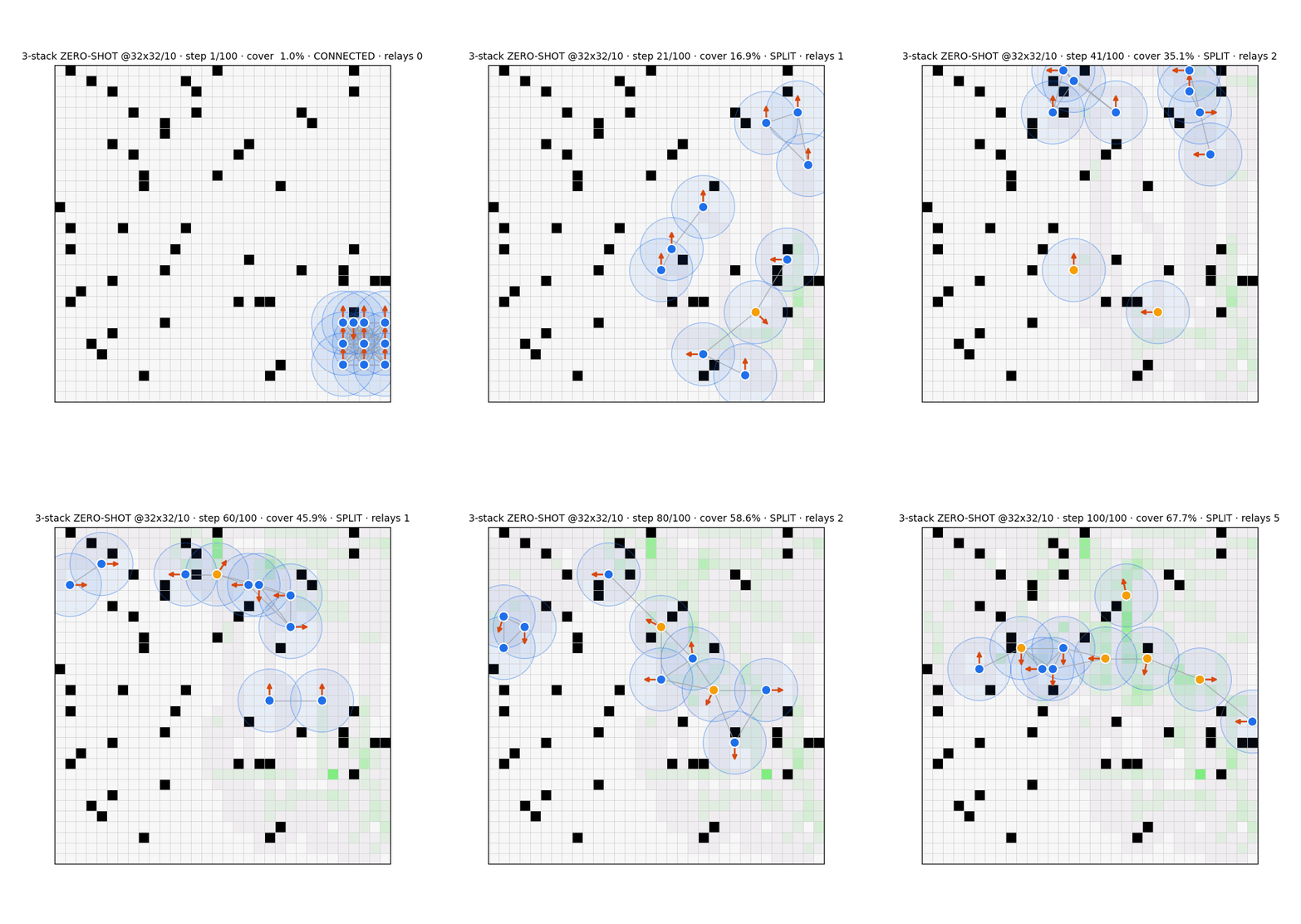
Start here. We build a connectivity-aware, decentralized coverage swarm and use it as an instrument: across roughly 18 experiments, coverage generalizes (train small, run big), but keeping the team in a single connected component hits a geometric wall that worsens with scale β connectivity falls from about 66% at 16Β² to 32% at 24Β² to 17% at 32Β². And roles (explorer vs. relay) emerge only under the right pressure: make connectivity a soft cost and relays appear; make it a hard wall and the role vanishes.
Zymera is a layered research program on the resiliency of cooperative autonomous swarms β spanning a formal theory, an experimental engine, a results paper, and a field map β unified by one question:
Research question. How do problems at the micro level (one agent misbehaving) propagate to the macro level (mission outcome), and how resilient is the mission β specifically for misbehaviors that are covert and stealthy (within nominal bounds, not detectable outliers)? The codename RedWithinBlue is literal: a red adversary inside a blue cooperative team.
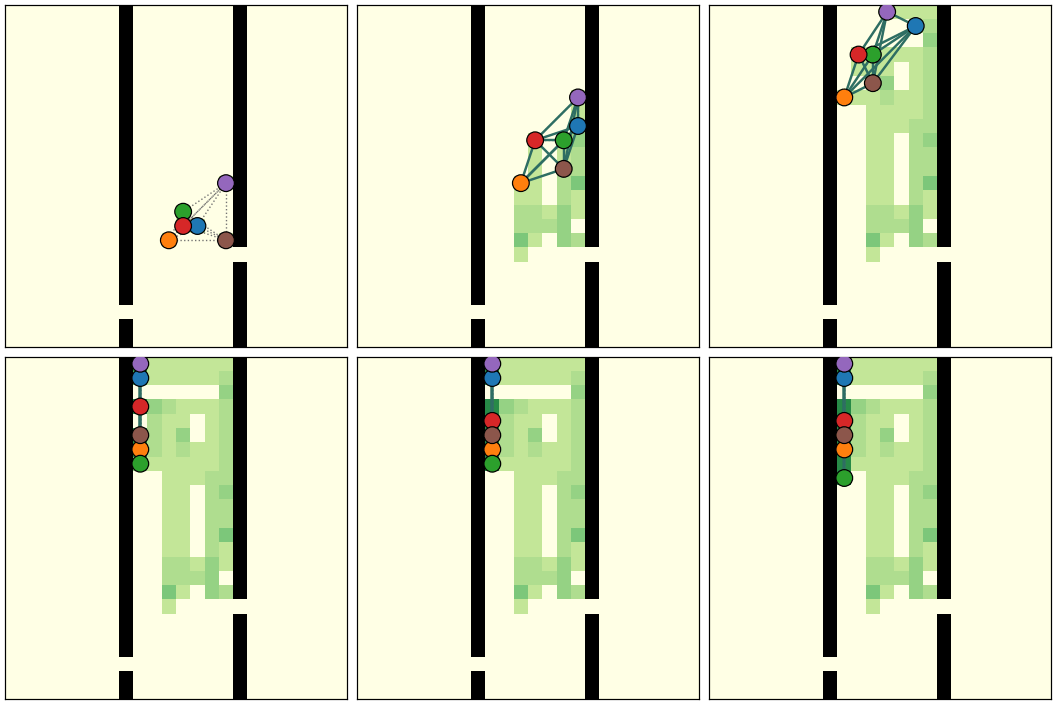
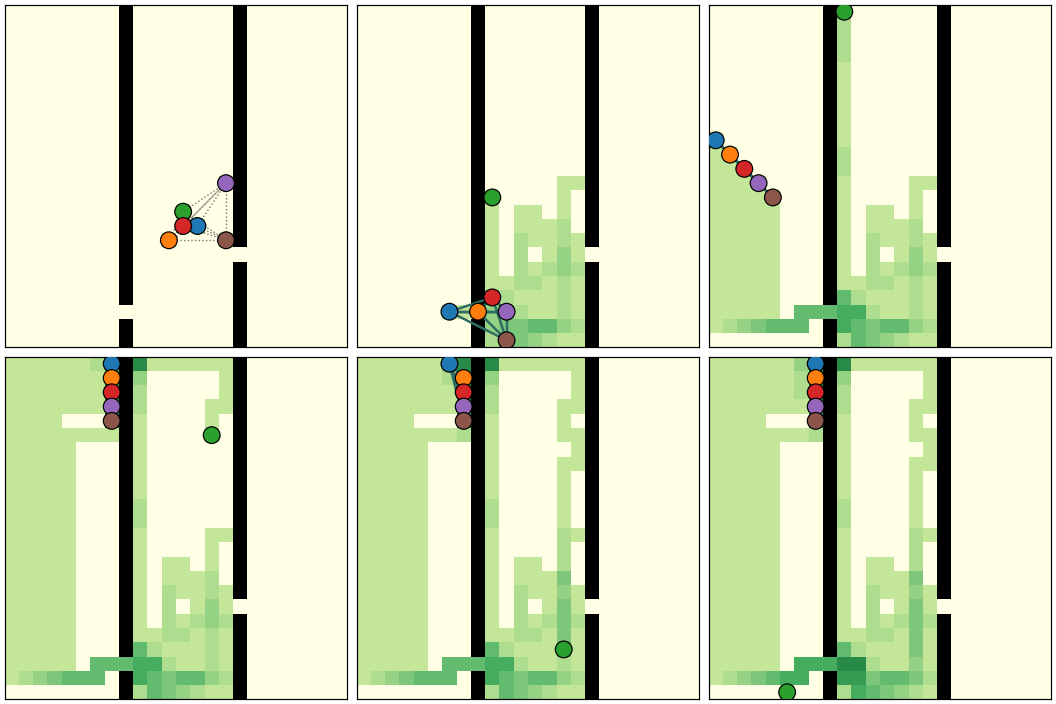
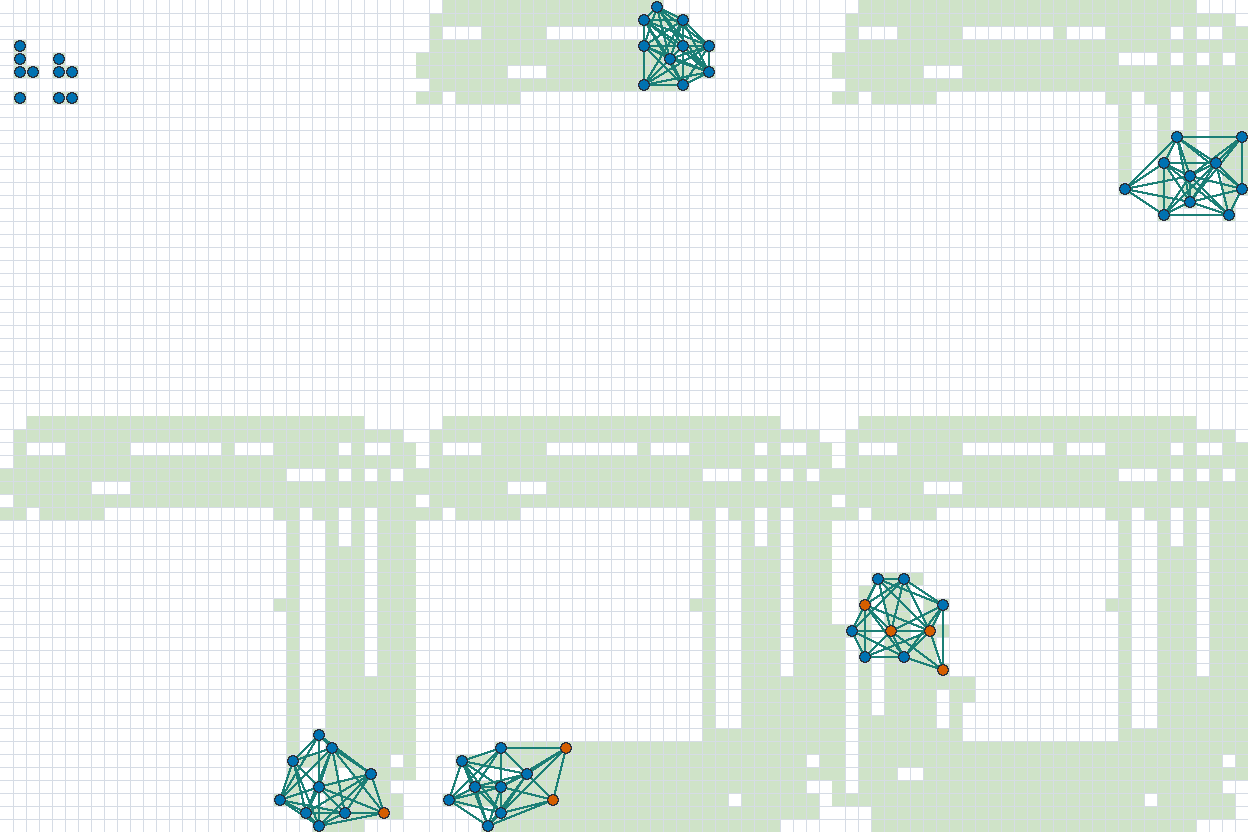
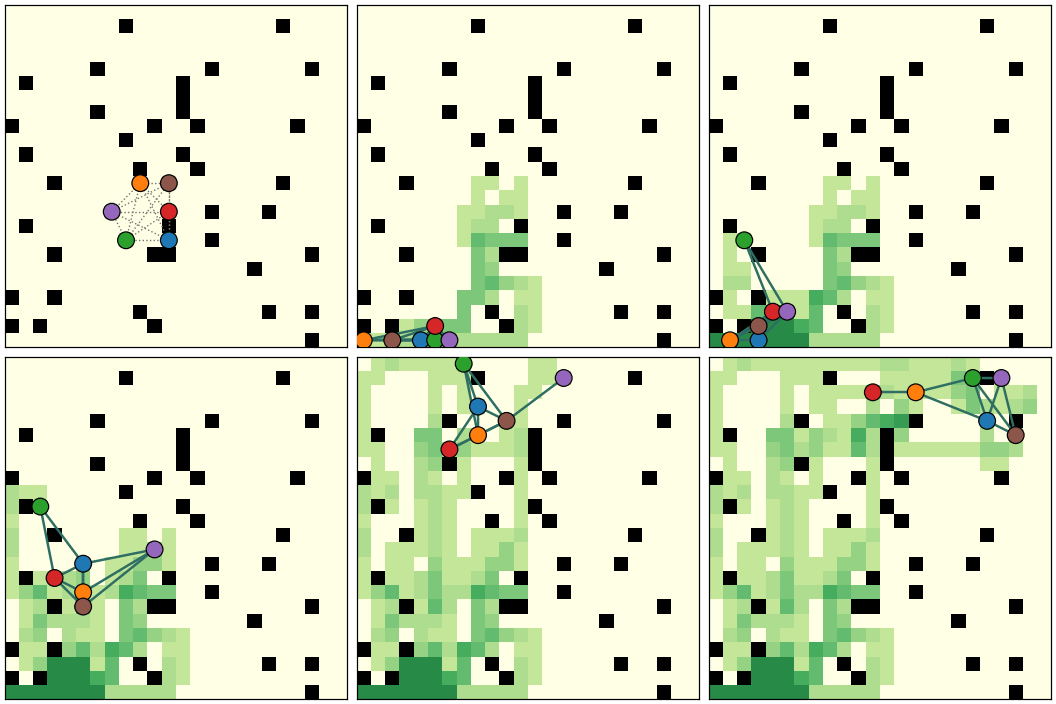
The cooperative coverage swarm shown above β a deterministic compass, an evolution-strategies relay/frontier role-switcher, and a learned size-invariant graph belief β is the engine layer that turns the theory into measurements.
formalism.tex β the mission-resiliency formalism: micro / bridge / macro, the stealth & break budgets, propagation, and the viability / robustness / elasticity / recovery metrics.
swarm_explore / RedWithinBlue β the JAX testbed and the five-era empirical journey (coverage β connectivity β roles β belief).
Stealth Attacks on Swarms β a two-player POSG, the compromise sweep, and the posterior-as-resilience-signal finding.
70-entry MARL / agentic-AI field map β the cooperative-vs-collaborative thesis and the gaps that situate this work.
The Sense / Organize / Act mission taxonomy β what kinds of missions exist and where this work sits within them.
Two systematic reviews + a direct scan. Where this sits between the connectivity, role-allocation, and covert-attack literatures β and what's genuinely open.
70-entry MARL / agentic-AI field map; the cooperative-vs-collaborative thesis & the gaps.
The mission-resiliency formalism: micro / bridge / macro, stealth & break budgets, viability.
The Sense / Organize / Act mission taxonomy & where this work sits.
The three stacks: compass, ES role-switcher with the mission-safety budget, and the recurrent graph belief. With the connectivity-guardrail and Ξ»β/r-robustness refinements.
Coverage ladder, hard-guardrail connectivity, belief transfer / k-fold / few-shot, role-switching transfer, belief-wiring at scale β with numbers and figures.
The structure-aware relaying we wanted, and the clump, the freeze, the geometric wall, and the other weird failure modes we learned from.
Cross-disciplinary mechanisms for the redesign β the elastic-rope comms model, physics (percolation, criticality), and small-group cooperative hunting β a relay/explorer role law. Filtered for our small-team scale.
The full program in seven compartments β theory, the five-era empirical journey, networks part-by-part, the paper, and field maps β with the why on every pivot.
Honest limitations, threats to validity, the defensible contribution, and links to the underlying drafts and code.